How Next-Generation Neural Networks Are Redefining Visual Workflows
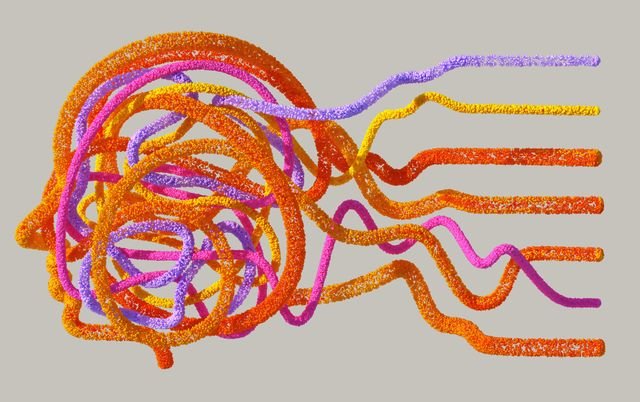
The digital content ecosystem is undergoing a dramatic shift. Over the past decade, creating high-impact visual assets required a combination of expensive studio setups, high-end design software, and years of specialized training. Today, neural networks, deep learning algorithms, and multimodal language models have fundamentally reshaped this dynamic. Visual creation is moving away from purely manual manipulation toward collaborative human-AI generation.
Central to this transformation is artificial intelligence—specifically, machine learning models trained on millions of visual-textual datasets. These systems allow creators, digital marketers, and design teams to translate abstract concepts into production-ready visual assets in seconds. As synthetic media technology matures, understanding how these underlying generative architectures operate—and how to effectively integrate them into modern creative workflows—has become essential for digital creators.
Also Read: The Evolution of Generative Visuals Navigating Modern AI Image Tools
1. Understanding Generative AI Models for Visual Content
At the core of modern visual generation are generative models designed to process natural language and construct corresponding images pixel by pixel. To appreciate how these tools work, it is helpful to look at the underlying neural network architectures:
Diffusion Models
Unlike early Generative Adversarial Networks (GANs), which pitted a generator against a discriminator, diffusion models work by reversing a process of gradual degradation. A diffusion model starts with pure Gaussian noise and iteratively removes that noise, guided by textual tokens provided by the user. By evaluating lighting, edge boundaries, and spatial semantics across multiple steps, the model transforms random noise into a coherent, high-resolution image.
Multimodal Generative Transformers
The integration of Large Language Models (LLMs) with visual decoders has yielded a class of multimodal systems capable of understanding context, spatial instructions, and complex visual prompts. By encoding text descriptions into unified vector space, these models interpret nuanced artistic directions—such as “dramatic side-lighting, 35mm film grain, minimalist composition”—with remarkable fidelity.
Image-to-Image and Inpainting Neural Networks
Generative AI extends well beyond simple text-to-image conversion. Advanced architectures support image-to-image translation, where an input image serves as a structural or stylistic blueprint. Combined with inpainting (editing specific regions within an image) and outpainting (extending canvas boundaries), creators can modify localized elements—such as altering clothing textures, swapping backgrounds, or adjusting facial expressions—without re-rendering the entire scene.
2. Key Technology Pillars of Next-Gen Visual Generation
As generative technologies advance, the focus has shifted from novelty to professional usability. Next-generation generative systems rely on several key capabilities to deliver consistent, high-quality output:
- Legible In-Image Text Rendering: Early generative tools struggled with text, often rendering scrambled characters or unreadable scribbles. Modern multimodal models overcome this by combining text generation logic with spatial rendering, making it possible to produce clean typography directly inside vector spaces—an asset for poster design, packaging concepts, and ad creative workflows.
- Identity and Style Consistency: A major challenge in AI art has been maintaining subject continuity across multiple iterations. Modern image-to-image mechanisms allow creators to lock subject features, lighting angles, or artistic themes across multi-frame sequences, such as comic panels or visual storyboards.
- High-Resolution Upscaling and Detail Recovery: Generating high-resolution visuals directly can be computationally intensive. Most modern pipelines construct images in a latent space before applying deep-learning super-resolution algorithms to upscale images up to 4K or 8K resolution, preserving sharp edges and fine surface textures.
- Multimodal Direct Control: Rather than relying solely on text descriptions, creators can now combine sketches, depth maps, color swatches, and written prompts into a single input stream, giving them precise control over spatial layout and visual hierarchy.
3. Practical Applications in Content Workflows
The real-world value of generative visual tools lies in their integration with practical production workflows. Digital creators across industries leverage these workflows to streamline asset generation and eliminate creative bottlenecks:
E-Commerce and Product Photography
Constructing physical sets, hiring models, and arranging studio lighting for product showcases can be time-consuming and expensive. Generative tools allow brand managers to place 3D product renders onto custom generated backgrounds—ranging from rustic wooden tables to sleek urban environments—while keeping the main product intact.
Social Media and Digital Marketing
Content marketing demands high volume and fast turnaround times. Marketers use an AI picture generator to draft custom graphics, social banner backgrounds, and campaign assets on demand. By removing the friction of sourcing stock photography, teams can tailor visual themes to specific campaign messaging instantly.
Traditional vs. AI-Assisted Production Metrics
To illustrate the operational impact, visual generation tools significantly compress turnaround times and cost structures:
- Asset Turnaround: Shifts from days or weeks to minutes or hours.
- Localization & Variants: Shifts from manual reshoots to automated digital edits.
- Production Cost: Replaces high studio overhead with scalable software systems.
- Creative Experimentation: Moves from budget-limited concepts to near-infinite visual variations.
Concept Art and Storyboarding
In filmmaking, animation, and gamedev, pre-visualization is critical. Concept artists generate detailed environment turnarounds and character explorations using natural language prompts. Multi-panel storyboards can be drafted in minutes, helping creative directors evaluate scene pacing, camera framing, and lighting setups before production begins.
4. Refining Results: Prompt Engineering & Guided Workflows
Generating professional visuals with AI models requires a structured approach to prompt formulation and iterative refinement.
Anatomy of an Effective Visual Prompt
A well-structured prompt provides clear context rather than loose keywords. To get consistent results, structure your input around five core components:
- Subject: Define the core focal point clearly (e.g., “A ceramic coffee mug on a slate desk”).
- Setting & Context: Describe the environment, depth of field, and background elements (e.g., “A sunlit architectural studio with blurred shelving in the background”).
- Lighting & Atmosphere: Specify light direction and quality (e.g., “Soft golden-hour window light casting subtle shadows”).
- Style & Medium: Indicate the visual medium (e.g., “Macro architectural photograph, 50mm lens, natural color grade”).
- Composition: Specify framing and angles (e.g., “Low-angle shot, rule-of-thirds composition, shallow depth of field”).
Moving Beyond Text: Guided Reference Workflows
While text prompts offer flexibility, combining text with reference inputs provides tighter control over the output. Advanced tools like the GPT Image 2.5 AI image generator allow creators to supply structural sketches, reference photos, or localized mask regions alongside text instructions. This hybrid approach helps ensure that generated assets align closely with existing brand guidelines, target layouts, and client specs.
5. Ethical Considerations and Future Horizons
As generative visual models become integrated into commercial content creation, several technical and ethical considerations emerge:
Provenance and Watermarking
To ensure authenticity and combat misinformation, industry consortia (such as C2PA) are introducing invisible cryptographic metadata and watermarking standards into synthetic media pipelines. These identifiers track an asset’s generation history, verifying whether an image was human-shot, AI-generated, or edited synthetically.
Copyright and Intellectual Property
The legal framework surrounding synthetic media is rapidly evolving. Current developments emphasize transparency regarding training data sources and the commercial rights of generated assets, highlighting the importance of using ethically trained, enterprise-compliant platforms.
The Emerging Human-AI Hybrid Model
Generative AI is not a replacement for human artistic direction; it is a powerful force multiplier. The most effective digital workflows treat AI tools as flexible canvas engines—handling initial visual ideation, background rendering, and repetitive asset variations—while human creators focus on storytelling, emotional resonance, and final creative assembly.
Conclusion
The evolution of visual generation tools—from simple filter presets to sophisticated, prompt-driven neural networks—marks a milestone in digital media creation. By combining multimodal understanding, precise structural guidance, and high-resolution output pipelines, modern creators can bring complex visual ideas to life faster than ever. Understanding these tools and incorporating them thoughtfully into creative workflows opens up exciting new possibilities for human expression and visual communication.